Individual Project / 2026
Syringa
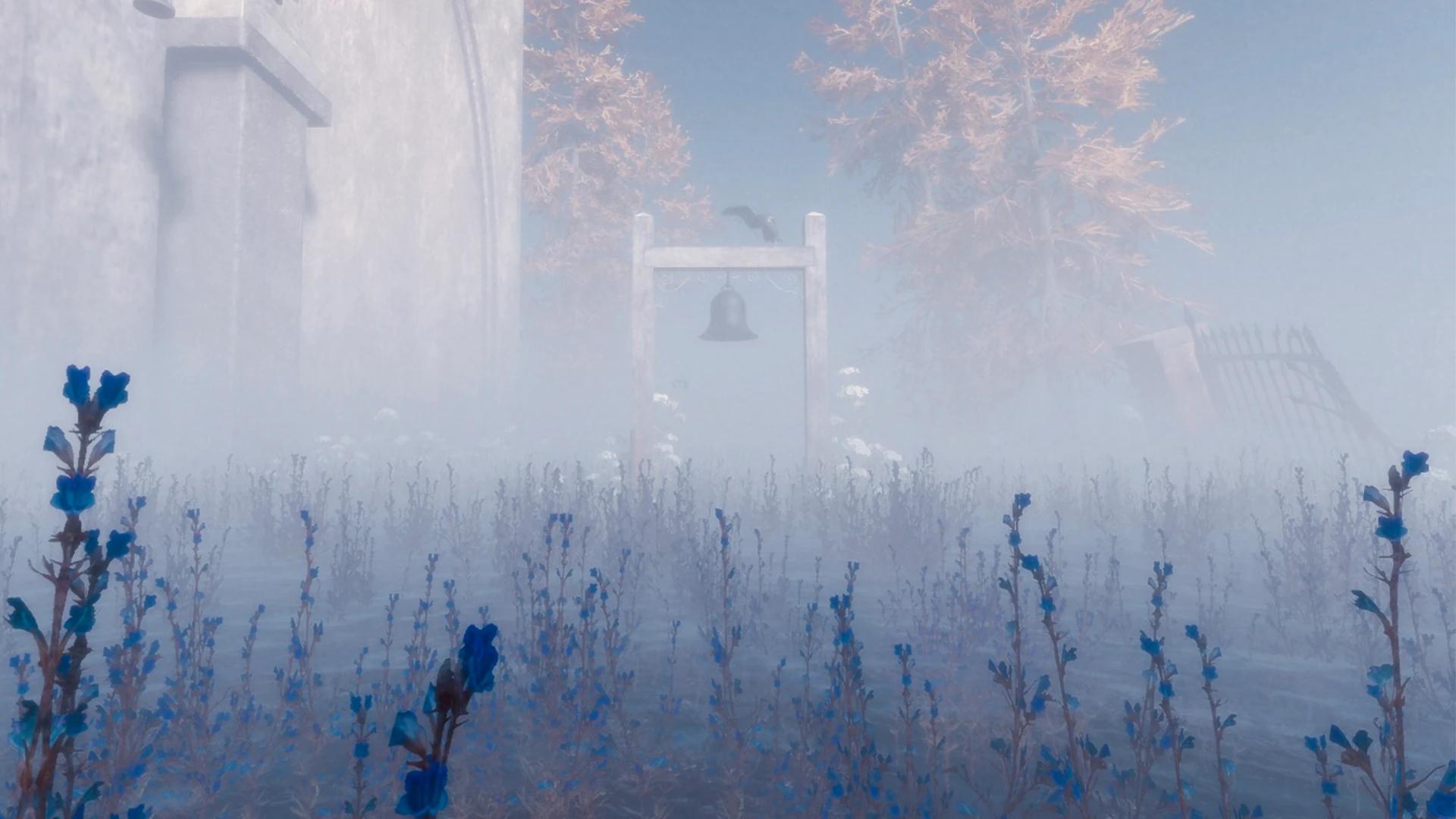
Description
Syringa is an experimental 3D game developed in Unity, originating from an earlier animation created in Unreal Engine. Inspired by the dreamlike landscapes of Andrei Tarkovsky’s Stalker (1979) and Solaris (1972), the project explores the expressive possibilities of cinematic language within virtual environments.
Central to the project is the concept of the Wild, a geographical phenomenon within an ongoing fictional world I have been developing. The Wild represents a form of absolute nature that cannot be fully articulated through language or comprehended through rational inquiry. Although it possesses a material presence, gradually encroaching upon human settlements and threatening their inhabitants through radiation and environmental hazards, it is deeply interconnected with the human psyche and collective consciousness.
The concept draws upon several philosophical frameworks: Carl Jung’s collective unconscious, Jacques Lacan’s notion of the Real, Jiddu Krishnamurti’s understanding of the inseparability of the self and the world, and, most significantly, Vladimir Vernadsky’s concept of the noosphere. Rather than treating human consciousness, scientific activity, and technological development as forces external to nature, the Wild situates them within nature itself. It challenges the anthropocentric assumption that scientific progress and geographical expansion necessarily lead to a greater understanding of the world. Within this fictional history, a catastrophic lunar incident eventually leads humanity to abandon its plans for extraterrestrial colonization. The Wild is therefore neither the antithesis of civilization nor a frontier awaiting conquest; civilization itself already exists within it.
Following my previous experiments with enclosed environments in The Atonement, I shifted my attention toward outdoor landscapes and placed greater emphasis on the audiovisual qualities of virtual environments. Through cinematic composition, ambient sound, and the simulation of natural phenomena such as wind, I sought to portray the Wild as both a tangible geographical landscape and a poetic space in which the boundaries between nature, memory, and human consciousness become blurred.